

Car polishing is a critical step in professional detailing. It restores paint clarity, removes watermarks or scratches to prepare the surface for coatings or waxes. But not all polishes are the same. Choosing the right type of polish, whether compound polish or finishing polish can make the difference between swirl-filled paint and a showroom-level gloss. As one of the top car care supplier in Malaysia, I’ll break down the differences, the pads used, and how Nanolab polishers fit into your workflow.
What Is Car Polishing and Why It Matters
Polishing is a paint correction process that removes a thin layer of clear coat to eliminate scratches, oxidation, water marks and swirl marks. It also enhances gloss and prepares the paint for protective products like ceramic coatings or water coatings.
What Is Compound Polish?
A compound polish is a heavy-cutting formula designed to tackle severe paint defects. It uses aggressive abrasives to level deeper scratches, oxidation, and heavy swirl marks.
Pros of Compound Polish:
- Removes heavy scratches, sanding marks, and oxidation
- Fast correction results
- Essential for older or heavily neglected paint
Cons of Compound Polish:
- Can leave micro-marring or haze if not followed by a finishing polish
- Removes more clear coat compared to lighter polishes
- Requires skill to avoid over-correction
Pads Typically Used:
- Wool Pads – Strong cutting power for heavy correction.
- Cutting Pads (foam or microfiber) – Controlled aggression with smoother finish than wool.
Best Use Case: Cars with dull, scratched, or heavily oxidized paint.
What Is Finishing Polish?
A finishing polish is a light-cut formula used for final refinement and gloss enhancement. It’s ideal for removing water marks, light swirl marks, or very light scratches.
Pros of Finishing Polish:
- Enhances gloss and depth of color
- Removes fine swirls and light scratches
- Safe for routine maintenance polishing
- Prepares paint for wax or coating
Cons of Finishing Polish:
- Not strong enough for deep scratches
- Slower correction if defects are moderate to heavy
Pads Typically Used:
- Polishing Pads – Softer foam pads that refine and enhance gloss without aggressive cutting.
Best Use Case: Light swirl correction, gloss restoration, and final refinement before coatings.
Why you should know the Nanolab All-in-One Polish
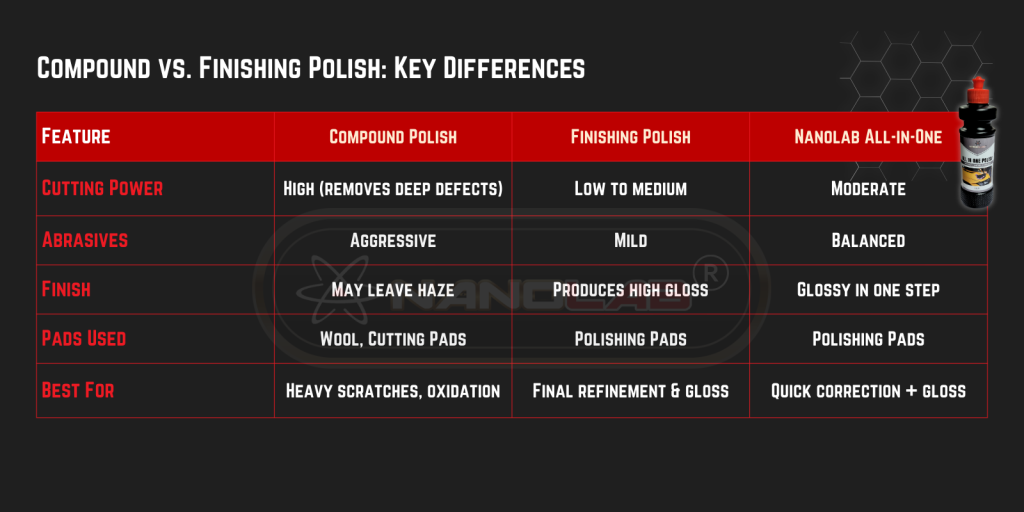
For detailers seeking efficiency without skipping results, Nanolab All-in-One Polish combines the benefits of a light compound and a finishing polish.
- Corrects minor imperfections and scratches
- Restores gloss in one step
- Remove watermark in multiple surfaces including chrome surface
- Ideal for detailing packages
- Works best with polishing pads for balanced correction and shine
Perfect for shops looking to save time & cost while still delivering a professional finish.
Need more info for polishing? Click here to contact Nanolab for FREE consultation!